Slow Living Checklist: 10 Daily Habits for a Calmer Country Routine
The countryside is quiet, but a quiet place does not automatically produce a quiet day. Plenty of people move to a village and find themselves running exactly the same hurried routine, only with a longer drive and worse broadband. Pace is not a feature of the postcode. It has to be built, habit by habit, until it holds on its own.
What follows is a working checklist: ten small things, done most days, that change how a household moves through its hours. None of them needs special equipment or a lifestyle overhaul. Most take five minutes. Together they decide whether the day feels like something you live in or something that happens to you.
A Checklist, Not a To-Do List
A list of habits is a different animal from a list of jobs. A to-do list is about finishing. A rhythm is about repeating. You are not trying to get slow living done and dusted by Friday; you are trying to make a handful of small behaviours so ordinary that the day bends around them without argument.
So read the ten habits as a menu rather than a programme. Pick two or three that fit your household this week — the ones that will cause least friction — and leave the rest for later. Add another only when the first feel automatic. A missed day means nothing. A missed week is simply a signal that the habit was too big, so choose a smaller one.
Morning: Set the Pace Before Anything Else Does
1. Wake without reaching for a screen
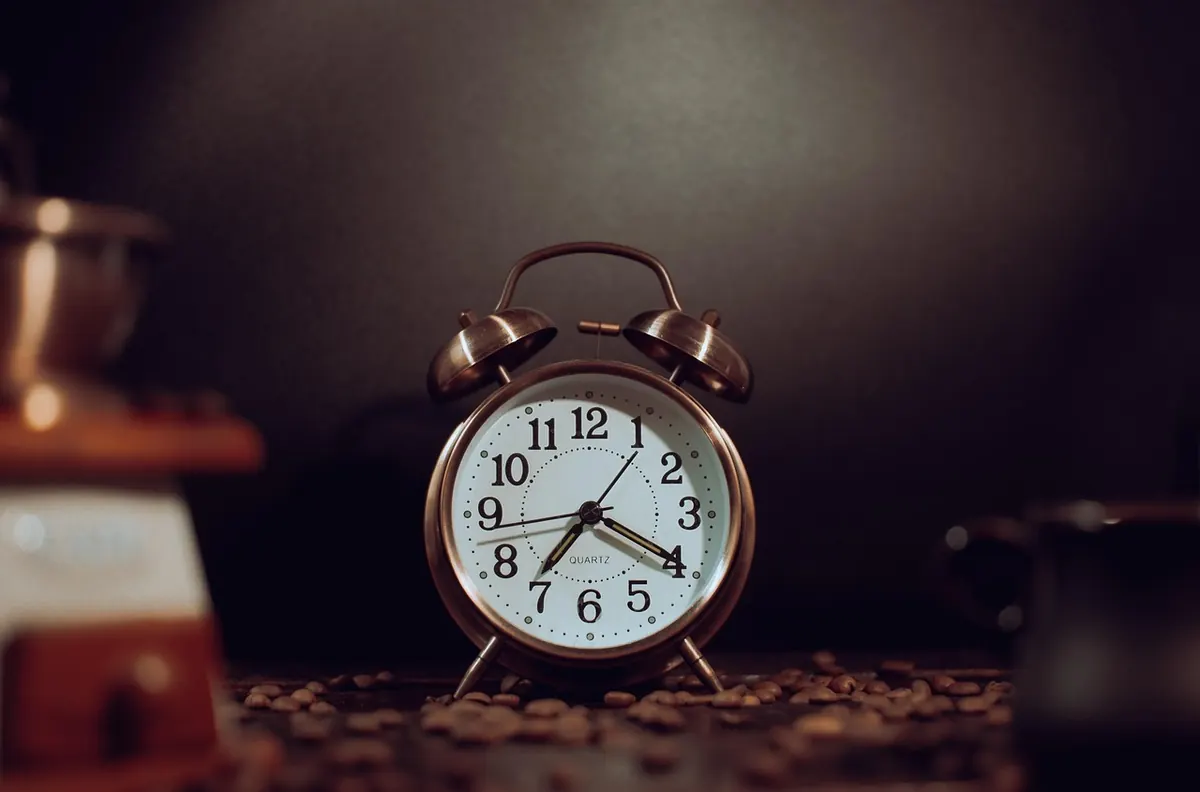
Leave the phone charging in the kitchen overnight and use an alarm clock, or at least put the phone across the room. The aim is not digital purity. It is that the first thing your mind meets sets its tone for the next hour. A weather forecast, three messages and a news alert are a fast way to start fast. A grey window and a kettle are slower company.
2. Step outside before you are properly dressed
Boots by the door, coat over whatever you slept in, five minutes at the edge of the garden. You are checking the sky, the ground and the temperature — the real ones, not the app's. Country mornings hand you useful information: whether the lane will be icy, whether the washing will dry, whether the wind is coming from the wrong direction for burning. It is also the cheapest way there is to wake up.
Middle of the Day: Protect Your Attention
3. Do one thing at a time, and say what it is
Before you start, name the task out loud or on paper: I'm clearing the greenhouse bench until the kettle boils. One task with a visible end point is far easier to finish than a vague list of half-stirrings. If something else occurs to you halfway through — the phone call, the seed order, the email — write it down and carry on. The note takes four seconds and saves the afternoon.
4. Eat one meal sitting down, without a screen
This is the habit people drop first and miss most. A plate at the table, a window to look out of, no scrolling. If you live alone, eat with the radio on or in silence. Twenty minutes is enough. It resets the middle of the day better than a second coffee, and it is usually when you notice what the house or the garden has been trying to tell you since breakfast.
5. Walk somewhere pointless once a day
Take the letters to the box by the lane rather than leaving them in the car. Carry your tea to the end of the garden instead of drinking it at the desk. Ten minutes of unremarkable outdoor movement does more for a country routine than a scheduled workout you keep postponing. It is also when you spot the things that need doing: the gate that has dropped, the gutter full of leaves, the blackbird nesting in the log store.
Afternoon: Leave Some Room in the Plan
6. Keep one slow hour, and defend it
One hour a day with no productive purpose. Sit on the step. Read four pages. Mend something badly. Watch the hens argue. The only rules are that you do not turn it into a task, and that you do not trade it away the moment something urgent appears — because something urgent always appears, and most of it can wait sixty minutes without harm.
7. Let the weather rewrite the list
Rural life gets much easier once you stop treating the forecast as an inconvenience. Wet Tuesday? That is the day for the cupboard that needs sorting, the paperwork and the seed packets. Bright and blowy Wednesday? Get outside and stay there. Keeping two columns — indoor jobs, outdoor jobs — means bad weather never leaves you at a loose end, and good weather never catches you indoors with a spreadsheet.
Evening: Bring the Day Down Gently
8. Close the house
A fifteen-minute circuit at dusk: doors locked, stove set for the morning, boots straightened, dishes done, one lamp on instead of four overhead lights. It is an old habit in old houses and it still works. Finishing the working day physically helps the mind follow, and it means tomorrow begins with a house that is already on your side.
9. Put tomorrow's first task where you will trip over it
Boots by the door, tools on the bench, the letter to post laid on top of the car keys. One decision made in the evening is one decision you do not have to make at seven in the morning, when your judgement is at its weakest and the morning is at its busiest.
10. Let the last hour be dim and quiet
Turn off the big lights. Read something on paper. If a screen-free hour before bed is too much to ask, manage twenty minutes and count it as a win. The point is the taper: a day that ends at full volume tends to start the next one already behind.
The Ten Habits at a Glance
- Wake without a screen in reach.
- Step outside for five minutes before getting dressed.
- Name one task and finish it before starting another.
- Eat one meal at the table, undistracted.
- Walk somewhere pointless outdoors.
- Protect one slow hour with no purpose.
- Keep a wet-weather list and a dry-weather list.
- Close the house at dusk.
- Set out tomorrow's first task tonight.
- Dim the last hour of the evening.
A slower day is rarely a bigger day. It is usually a smaller one, done with more attention.
Starting, and Keeping It
Choose three habits, not ten. Write them on a card and stick it inside a kitchen cupboard door, where you will see it while the kettle boils and nowhere else. Review at the end of the month: which one has become automatic, which one keeps slipping, which one you resent. Drop the one you resent. Then add a fourth, or don't.
Two practical notes. First, tie each habit to something you already do — the walk happens after the post, the slow hour begins when the lunch plates are cleared. Existing routines are free scaffolding. Second, expect the rhythm to shift with the seasons rather than fight it: winter evenings invite an earlier close, summer ones push everything later, and neither is a failure of discipline.
The test of a routine is not how it looks written down. It is whether you get to the end of a week and feel you were actually present for it. If three of these habits get you there, the other seven can wait until spring.
Photo: RuslanSikunov / Pixabay

How to Create a Pollinator-Friendly Wildflower Patch in a Country Garden
A practical guide to planning, preparing, sowing and tending a wildflower patch that feeds bees and...
Understanding Rural Waste and Recycling in Italy: A Practical Explainer
A practical guide to rural waste in Italy: how local collection works, what goes in each bin, using the...
About Us