How to Create a Pollinator-Friendly Wildflower Patch in a Country Garden
A pollinator patch is not a neglected corner. It is a small, deliberate habitat: flowers for nectar and pollen, stems and bare ground for nesting, and a little mess for shelter. In a country garden you have an advantage — hedges, field edges and old walls nearby — but also wind, coarse grasses and weeds that are happy to take over. The trick is to give wildflowers a fair start, then resist the urge to tidy too much. This guide walks through the practical steps: choosing a site, reading your soil, sowing seed that suits it, and looking after the patch so bees and butterflies keep coming back.
Start with the site, not the seed
Most wildflower failures begin with a seed packet and a sunny afternoon. Better to spend an hour with a cup of tea and watch where the sun lands. Choose a spot that gets sun for most of the day and is sheltered from the prevailing wind. A south-facing strip beside a hedge is often better than a large open square in the middle of a lawn. Avoid hollows that hold water, deep shade under trees, and any ground that catches spray drift from the vegetable plot or neighbouring fields.
Size matters less than manageability. A patch of three by two metres is enough to make a difference, and it is far easier to weed, cut and observe than a half-acre you cannot reach. Leave a mown edge or a narrow path alongside it. In a rural garden, that edge also gives the patch a deliberate shape, so it reads as a habitat rather than an abandoned bed.
Match the patch to your soil
Wildflowers are not demanding, but they are specific. Many of the best pollinator plants evolved on thin, hungry ground. If your patch is covered in nettles, docks and rank grass, your soil is fertile; adding compost will please the weeds and make wildflowers sulk. Do not enrich the ground. If the soil is very rich, strip the top five to ten centimetres before sowing, or grow cornfield annuals for a season while you decide what to do next.
Check drainage before you commit. Dig a spade-sized hole, fill it with water, and see how long it takes to disappear. If it is still full the next morning, choose another spot or build a slightly raised bed. On heavy clay, autumn sowing can be risky; a spring sowing may settle in better. On light, sandy soil, seedlings dry out quickly, so keep a gentle eye on them in their first weeks.
Clear the ground properly
Wildflower seed is expensive and slow to establish. It deserves a clean start. Remove existing turf and weeds rather than scattering seed into thick grass and hoping. A tidy seedbed at sowing time is not the same as a sterile one, but it should be free of established competition.
- Cut the existing growth short and rake off the clippings.
- Strip turf with a spade or smother it with overlapping cardboard weighed down for a full season.
- Fork over compacted patches, then rake the surface level.
- Firm the soil with a board or roller so the seed has a stable surface.
- Water gently if the ground is dry, then sow without delay.
If you use cardboard or black plastic, be patient. A full growing season of smothering will save you months of hand-weeding later. Avoid digging deeply; you only bring fresh weed seed to the surface.
Choose seed that belongs in your area
Look for native wildflower seed of local provenance where you can find it, and read the label properly. A mix for chalky soil will disappoint on clay, and a cheerful “butterfly mix” may contain aggressive grasses or non-native plants that crowd out the delicate species. Many suppliers sell mixes by soil type, which is a useful shortcut.
Annual cornfield flowers give quick colour in the first year, while perennial meadow plants take longer to settle. A simple starting point is a regionally appropriate perennial mix, with a few annuals for early interest. Reliable pollinator plants include oxeye daisy, red clover, bird’s-foot trefoil, common knapweed, field scabious, yarrow and self-heal. Check what is native to your area before buying, and avoid anything labelled as invasive.
Sow thinly and firmly
Autumn is often the best time for native perennials, mimicking the natural drop of seed after flowering. On heavy, wet soil, spring may be safer. Follow the sowing rate on the packet; more seed is not better, because crowded seedlings compete and the patch becomes a thicket of grass. Mix the seed with damp sand or fine vermiculite so you can see where it lands.
Divide the patch into rough squares and broadcast half the seed in one direction, then half across it. Rake very lightly — just enough to give the seed contact with the soil — and press the surface with a board. Never bury wildflower seed deeply. Water gently, keep the patch moist for the first few weeks, and mark the edges with pegs or a mown line so you do not accidentally hoe it. Birds will take some seed; that is part of the bargain.
Support bees and butterflies beyond the flowers
Flowers are the shopfront. Insects need the whole street. A shallow saucer with pebbles gives bees and butterflies a safe place to drink; top it up in dry spells and empty it now and then so it does not become a mosquito nursery. Leave a few patches of bare ground for ground-nesting bees, and let dead stems and seedheads stand through winter for shelter and egg-laying sites.
Butterflies also need larval food plants. A corner of nettles, a clump of thistles at the field edge, or some long grass left uncut can do more for them than another row of flowers. Avoid pesticides and weedkillers in and around the patch. If you must spray elsewhere in the garden, do it on a still evening when flowers are not open and follow the label carefully.
Manage the first year and beyond
The first year can look scruffy. Annuals flower, perennials put down roots, and weeds test your resolve. Cut annuals after they have set some seed, and remove the cuttings so you are not feeding the soil. In late summer or autumn, cut the perennial patch to about ten to fifteen centimetres, leaving a few seedheads for birds and insects. Rake off the clippings.
In spring, cut back the dead growth before new shoots appear. Do not mow the whole patch at once; rotate the cuts so there is always somewhere for insects to shelter. If grass begins to dominate, cut earlier and remove the clippings. Fill bare gaps with plug plants rather than more seed. And resist fertiliser. A wildflower patch should be left a little hungry.
A patch that earns its place
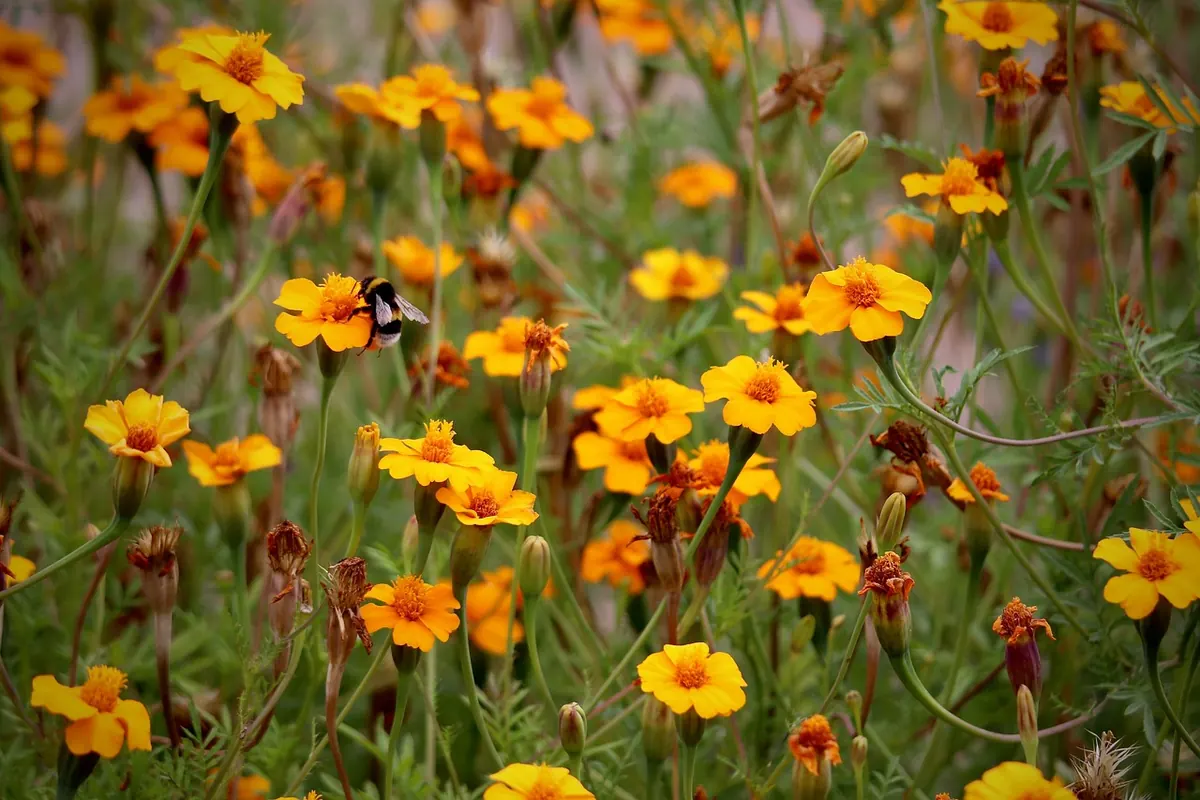
Start with a strip you can manage, keep a mown edge, and watch what happens. A wildflower patch is not a one-off project; it is a conversation with the weather, the soil and the insects that find it. The reward is modest and specific: bees working the clover on a July morning, a butterfly drying its wings on a warm stone, a patch that looks alive rather than merely neat. In a country garden, that is not decoration. It is the point.
Photo: Nennieinszweidrei / Pixabay

Understanding Rural Waste and Recycling in Italy: A Practical Explainer
A practical guide to rural waste in Italy: how local collection works, what goes in each bin, using the...

A Checklist for Planning a Slow Weekend in the Rural Countryside
A practical checklist for a rural weekend that actually rests you: choosing the right base, packing...
About Us