What Is Agriturismo? A Practical Explainer for Rural Stays in Italy
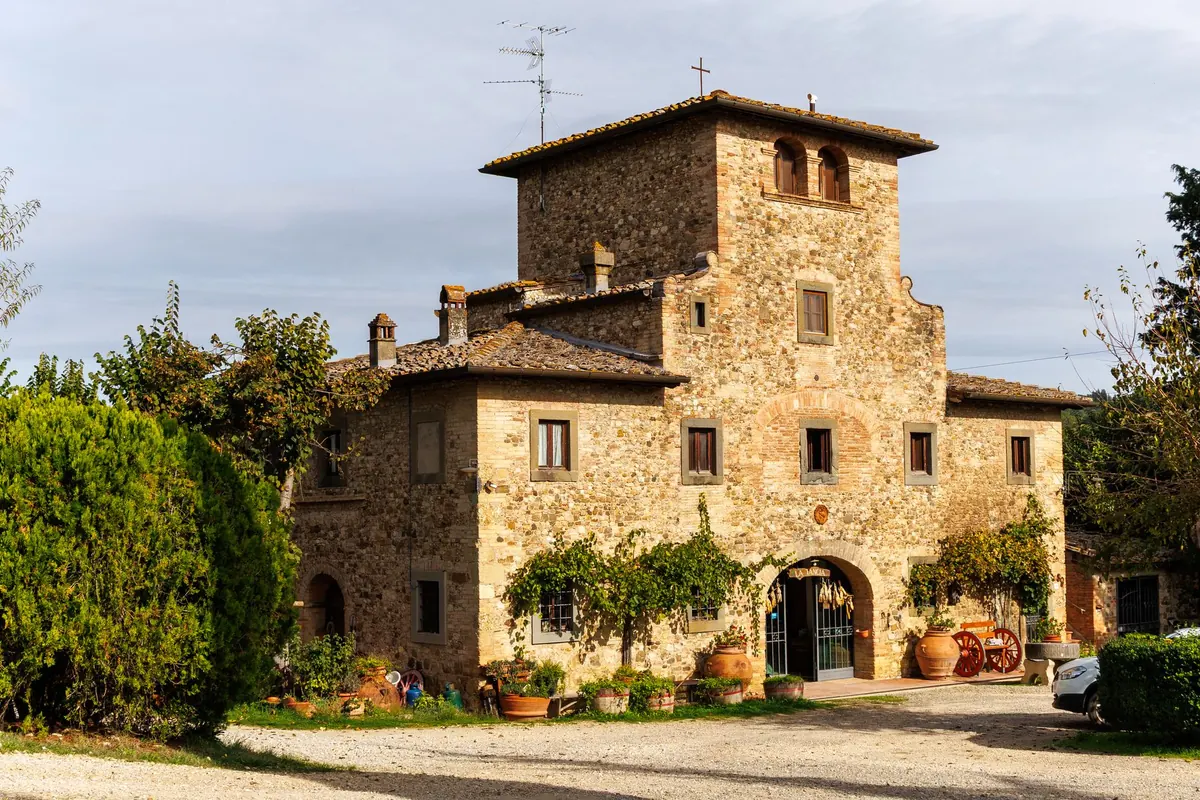
You drive up a gravel track, past a row of olive trees and a shed with a tractor half inside it, and park beside a stone house where someone's grandmother is trimming beans on the step. By seven the next morning the farm will be awake whether you are or not. That mix of holiday and working landscape is the whole point of agriturismo, and it is also the thing that catches first-time guests out.
It helps to know what you are booking. Not because there are rules you must follow as a guest, but because the expectations you arrive with decide whether the stay feels generous or slightly off. An agriturismo is not a hotel in a field, and it is not a rural themed experience either. It is a farm that takes in guests.
The word has a legal meaning
In Italy, "agriturismo" is not a marketing adjective. It is a category of business defined by law: a national framework law from 2006 sets the principle, and each region writes the practical rules, which is why a stay in Tuscany and a stay in Le Marche can follow slightly different paperwork. The core requirements are consistent. The farm must be a genuine agricultural business — land, crops, animals, or a combination. The hospitality must be offered by the farmer. And it must remain secondary to farming rather than replace it.
That last condition shapes everything else. A beautifully restored farmhouse surrounded by other people's fields may be a fine place to sleep, but it is a country house or a bed and breakfast, not an agriturismo. The simplest way to find out is to ask what they grow or raise. A real one answers with detail, and will usually offer to show you.
How it differs from a hotel, and from a farm stay
Hotels are built around guests. An agriturismo is built around a farm, and guests fit around the work. That single sentence explains most of the differences you will notice over a few days.
- Scale. Many have three to eight rooms. Some have two. You will probably meet the owner within the first hour and see them every day after that.
- Service is personal, not professional in the hotel sense. The person who cooks your breakfast may have been up since five moving animals or irrigating. Things run on the farm's timetable.
- Meals are usually a fixed menu built from what is available, served at a set hour, rather than a long à la carte list. Some farms cook only for guests and only on certain nights.
- There is no night desk. Arrival windows matter. If you are running late, call.
- The setting is working. Machinery, animals, feed deliveries, seasonal smells and noises. Some of it is charming, some of it is just a farm.
- Comfort is honest rather than uniform. Rooms vary enormously from one property to the next, and even within one property.
The English phrase "farm stay" is looser. It can describe anything from a working dairy with camping pitches to a converted barn with a hot tub. In Italy the word carries the legal weight described above, which makes it a useful filter when you are comparing options.
Rooms, buildings and the comfort you should expect
Much of the accommodation sits in converted agricultural buildings: former barns, haylofts, stables, the farmhouse itself. Expect thick walls, small windows, cool rooms in summer, and the occasional low beam you will learn to duck under. Cleanliness is usually high, furnishing is often simple and sometimes charmingly mismatched.
What varies most is the practical detail, so ask rather than assume. A private bathroom is standard in most places but not universal in the smallest ones. Air conditioning is common in the hotter regions and absent in hill country where nights cool down. Mosquito nets, heating, and Wi-Fi that reaches the bedroom rather than just the courtyard are all worth confirming in writing.
Ask what will be happening on the farm while you are there. Harvest, pruning, lambing or nothing at all — it changes the character of the stay more than the thread count does.
At the table
Food is where agriturismo earns its reputation, and where it most often surprises people. Dinners, when offered, tend to be generous set menus: cured meats made on site, vegetables from the garden, a first course, a main, something baked, wine from nearby. You rarely choose from a list, and you should say so at the time of booking if you don't eat meat, or fish, or gluten — the kitchen plans ahead, and a request made at the table is much harder to answer.
Breakfast is Italian by default: bread, jam, cake, yoghurt, coffee. If you want eggs and something savoury, ask before you arrive; many farms will happily do it, but they won't assume.
Not every agriturismo has a restaurant. Some serve only overnight guests, some only in high season, some not at all. This is the single most useful thing to check, because in rural areas the nearest alternative may be a fifteen-minute drive on an unlit road.
What a day actually looks like
Mornings are quiet and practical. You may be invited to help feed animals, collect eggs, or walk a field with the owner. Some farms run educational visits for school groups and welcome children into the barn; others are working businesses that prefer guests to keep to the garden and the pool. Neither is wrong, but they suit different travellers.
Autumn is the most active season in much of the country — olive picking, grape harvest, chestnuts — and some properties genuinely welcome extra hands for a morning. In summer the pattern is slower: shade, long lunches, a swim if there is a pool, a drive to a hill town in the late afternoon. Evenings are early and quiet. Bring a book, and a torch for the walk back from dinner.
Before you book: a short checklist
- Confirm the farm is working, and ask what it produces.
- Ask which nights dinner is served, and whether you need to book it in the morning.
- Check the room details: private bathroom, heating or air conditioning, mosquito nets, Wi-Fi reach.
- Ask about the last stretch of road — gravel, steep, unlit, or narrow enough to matter after dark.
- Confirm the arrival window, and get a phone number for the evening you arrive.
- Find out what is within walking distance and what needs a car.
- Mention children, dogs, allergies and dietary needs at booking, not on arrival.
- Ask how payment works; smaller farms may prefer cash or a bank transfer.
Getting the stay right
Two nights is the minimum that makes sense. One night in a working farm is mostly logistics; two gives you a full day in the rhythm of the place. Arrive before dark if you can, especially on a rural road you have never driven. Learn four words of Italian — buongiorno, grazie, per favore, arrivederci — and use them.
Treat the farm as someone's workplace. Don't wander into barns uninvited, close gates behind you, keep children away from machinery, and respect quiet hours. Buy something from the farm before you leave: oil, honey, cheese, a sack of flour. It is the most direct way to support the agricultural work that makes the category exist in the first place — and it is usually the best souvenir of the trip.
Photo: Toni Seyfert / Pexels
How to Create a Pollinator-Friendly Wildflower Patch in a Country Garden
A practical guide to planning, preparing, sowing and tending a wildflower patch that feeds bees and...

Understanding Rural Waste and Recycling in Italy: A Practical Explainer
A practical guide to rural waste in Italy: how local collection works, what goes in each bin, using the...
About Us